


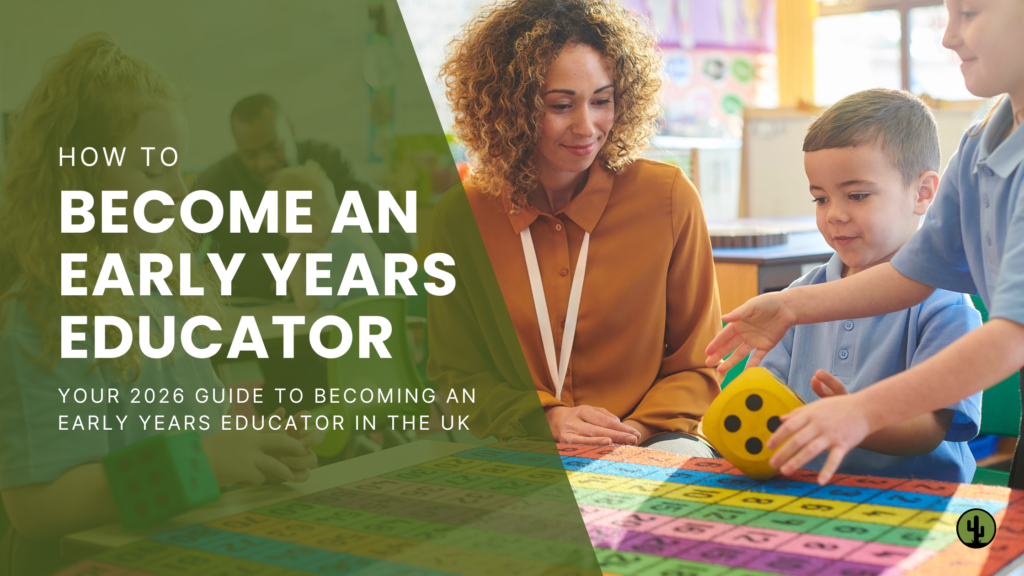
If you enjoy working with young children and want a career that makes a real difference from the very start of life, becoming an early years educator could be the right path for you. Early years professionals play a vital role in supporting children’s learning, development, and wellbeing during their most important formative years.
With growing demand across nurseries and early years settings in the UK, early years education offers stable career opportunities and clear progression. And the good news is, you don’t need a degree to get started. Employers are actively looking for trained staff who meet Early Years Foundation Stage (EYFS) requirements, creating strong opportunities for those entering the sector.
In this guide, we’ll explain what an early years educator does, how to become one in the UK, and how a Level 3 Early Years Educator Diploma can help you take your first step into this rewarding profession.
An early years educator is a trained professional who supports the learning, development, and wellbeing of children from birth to five years old. They work in nurseries, pre-schools, and other early years settings, creating a safe, stimulating, and nurturing environment where children can thrive.
Early years educators follow the Early Years Foundation Stage (EYFS) framework, helping children develop essential skills in communication, social interaction, and early learning. Unlike classroom teachers, they focus on play-based learning, observation, and tailored support to meet each child’s individual needs. They also work closely with families to ensure children are supported both at home and in the setting.
With the right training, such as an Early Years Educator Diploma, you can gain the skills and knowledge needed to meet EYFS requirements, understand child development, and confidently support children’s learning from day one.
Yes, early years educators are in high demand across the UK. With more families relying on childcare and early education, nurseries and early years providers are continually looking for qualified staff who meet EYFS standards.
Recent reports show the sector needs tens of thousands of trained professionals to keep up with demand. Government-funded childcare hours and the growing focus on early childhood development have further increased the need for skilled educators. According to UK government workforce data, this ongoing demand means strong job prospects and long-term opportunities across both private and public early years settings.
Becoming an early years educator starts with a passion for working with young children and understanding their needs. While you don’t need a degree, you do need the right training and practical experience to meet Early Years Foundation Stage (EYFS) standards.
Most educators begin by gaining hands-on experience in nurseries, pre-schools, or childminding settings. This experience helps you understand daily routines, child development, and how to create a safe, stimulating environment.
Next, completing a recognised or formal qualification prepares you for professional responsibilities. A diploma for working in early years sector provides the knowledge, skills, and confidence to support children effectively while meeting national standards. The course covers essential topics such as:
Once qualified, you can work as an early years educator, nursery practitioner, or childcare professional in a variety of early years settings, applying your skills in real-world environments.
Entry requirements vary, but GCSEs in English and Maths are essential for everyday tasks, like communicating with parents, supporting children’s learning, and meeting EYFS standards.
Prior experience in childcare can be helpful, but it’s not always required. Many courses are designed for people just starting out as well as those already working in nurseries or pre-schools.
If you’re currently employed in nurseries or pre-schools, it’s often possible to complete the qualification alongside your job. This flexible approach lets you formalise your skills, grow your confidence, and continue making a difference in children’s lives every day.
Starting as an early years educator is just the beginning of a rewarding career. With experience and further training, you can progress to roles such as:
Some educators may go on to pursue degree-level study or Early Years Teacher training, but many build fulfilling long-term careers within nurseries, pre-schools, and other early years settings.

Early years educator salaries in the UK vary depending on experience, qualifications, and the type of setting. Entry-level roles typically start around £18,000–£21,000 per year, while those with experience or who have completed a Level 3 Early Years Educator Diploma can earn £23,000–£30,000.
Educators who progress into leadership, managerial, or supervisory roles, such as room leaders or nursery managers, can earn up to £40,000.
Choosing the right training is essential for building confidence and competence in early years education. At London Cactus College, we offer a practical, recognised course that helps learners step into the sector with confidence.
To qualify as an early years educator, you generally need:
Qualifications: A Level 3 Diploma (equivalent to A-Levels) or similar is required.
GCSEs: English and Maths at Grade 4/C or equivalent are needed to count as a Level 3 staff member in ratios—even if you start your training without them.
Experience: Typically, two years of hands-on experience working with young children is expected.
Our Early Years Educator Diploma (NCFE CACHE Level 3) is designed for learners who are already working in nurseries or pre-schools. This makes it possible to formalise your skills while continuing to support children every day, giving you a flexible and practical route to advance your career.
Completing this course equips you with the knowledge, confidence, and professional recognition needed to progress in early years education and meet the standards set by the EYFS.
Being an early years educator isn’t just a job, it’s your chance to shape young lives while growing your career. With the right training, hands-on experience, and qualifications, you can step into a role that offers stability, growth, and real impact. With strong demand across the UK, 2026 could be the best year to start, take the first step and make a difference in children’s lives today.