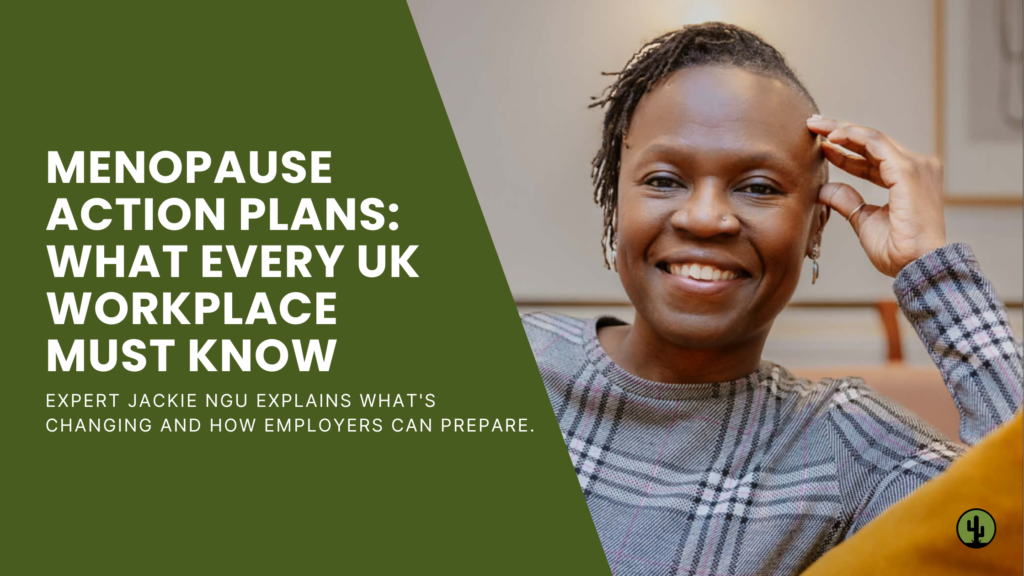
It’s Menopause Awareness Month, and this year it lands alongside a genuine shift in UK employment law. For the first time, menopause has been written directly into legislation as a workplace issue. As someone who’s spent years leading teams while quietly managing my own menopause symptoms, I can tell you this isn’t just another policy update, it’s something I wish had existed when I needed it most.
Here’s what’s actually changing, what the numbers tell us, and what you can do about it before the deadlines arrive.
What’s actually changing
Under the Employment Rights Act 2025, which received Royal Assent in December 2025, large employers (250 or more staff) will need to publish an Equality Action Plan alongside their existing gender pay gap report. Every plan must include at least two actions: one to address the gender pay gap, and one to support employees experiencing menopause, including perimenopause and post-menopause.
The rollout is phased:
From April 2026: publishing an action plan is voluntary, timed to the 2026/27 gender pay gap reporting year
From April 2027: it becomes mandatory for employers with 250+ staff
By April 2028: the first compulsory action plans, covering the 2027/28 reporting year, must be published
Smaller organisations aren’t currently in scope, but the government is actively encouraging voluntary adoption across businesses of all sizes. I’d say that’s the real opportunity here: getting ahead of this rather than scrambling to comply later.
Employers can choose from 18 government-recommended actions, covering things like manager training, occupational health support, workplace risk assessments, and practical adjustments such as flexible hours, temperature control, and relaxed uniform policies.
Why this matters more than a policy document
The numbers make the case better than I ever could. According to CIPD research based on a survey of over 2,000 working women aged 40 to 60 in the UK, 17% have considered leaving work due to a lack of menopause support, and a further 6% have already left their job. More than a quarter (27%), around 1.2 million women, say menopause has negatively affected their career progression.
There’s progress worth noting too: in 2019, only 10% of UK organisations had any framework to support employees through menopause. By 2023, that had risen to 46%. Support works, but only once it’s actually in place. With more than seven million women aged 40 to 60 in the UK workforce, most of whom will experience menopause symptoms at some point while working, this isn’t a niche issue. It’s a workforce-wide one.
My take, as someone who’s lived it
I didn’t learn about menopause at work from a textbook. I learned it while leading a team, hitting targets, and trying to work out why I suddenly couldn’t concentrate in meetings I used to run with ease. Like a lot of women in leadership roles, I kept quiet about it for longer than I should have, because I didn’t know how to raise it, and I wasn’t sure anyone above me would understand even if I did.
That experience is exactly why I now combine my background in operations leadership with my work as a certified yoga instructor to teach this differently: practically, empathetically, and grounded in what it’s actually like to go through menopause while running a demanding career. It’s not really about compliance. It’s about making sure the next woman going through this doesn’t have to figure it out alone, the way I did.
What employers can do now
You don’t need to wait until 2027 to start. A few practical first steps:
- Train your managers first. Most employees going through menopause will raise it with their line manager, if anyone, so that’s where confidence and understanding matter most.
- Review what adjustments you can offer. Flexible hours, temperature control, and uniform flexibility are consistently rated by employees as the most helpful forms of support.
- Open the conversation. Normalising the topic in team meetings or internal communications does more for culture than a policy document buried in the staff handbook.
- Start your action plan early. Even while it’s voluntary, publishing one now puts you ahead of the 2027 deadline and signals real commitment to staff.
This is exactly where I come in. My Menopause in the Workplace course is built specifically for HR teams, line managers, and employers who want to meet this moment properly, not just on paper.
Ready to prepare your team?
Whether you need a single course for your HR team or a tailored session delivered to your whole organisation, I’d love to help you get there. Explore our Menopause Awareness Training options or get in touch to talk through what would work best for your workplace.
FAQs