Preparing for a nursing interview can feel overwhelming, but with the right training, structure, and confidence, you can stand out for all the right reasons. Whether you’re just starting your training to become a nurse or are already a qualified professional looking for your next step, this guide will help you navigate the most common nursing interview questions with ease.
What to Expect in a Nursing Interview
Nursing interviews are designed to assess both your clinical knowledge and your personal values. Interviewers want to know not only what you’ve learned through your education and training to become a registered nurse, but also how you apply compassion, communication, and professionalism in real-world scenarios.
You can expect a mix of:
- Behavioral questions (based on past experiences)
- Situational questions (how you’d respond in certain scenarios)
- Values-based questions (how you align with the NHS 6 Cs and patient care standards)
Being well-prepared means showing your motivation, empathy, and readiness to grow in the healthcare field.
How to Handle Behavioral Questions in Nursing Interviews
Behavioral questions are common in nursing interviews because they reveal how you think and act in real-life scenarios. Employers want to understand how you respond under pressure, deal with conflict, and care for patients.
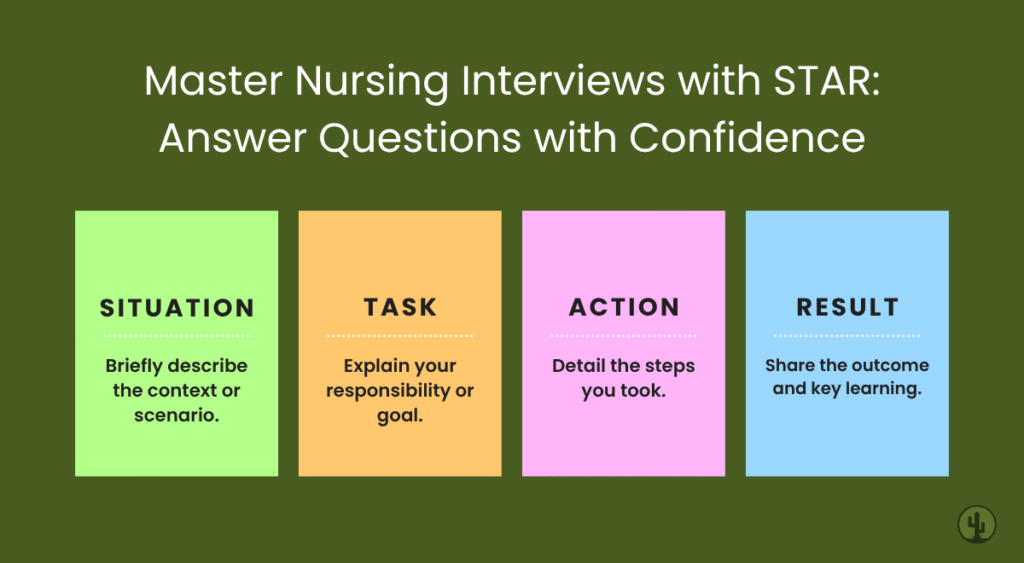
The best way to answer these is by using the STAR format:
- Situation: Briefly describe what was happening.
- Task: Explain your role or responsibility.
- Action: Describe the steps you took.
- Result: Share the outcome and what you learned.
This keeps your answers structured, clear, and focused on your strengths.
Tip: Even when describing mistakes or challenges, end on a positive note, talk about what you learned and how you’ve improved.
Top 10 Nursing Interview Questions and Answers
1. Tell Me About Yourself
This is usually the first question in any nursing interview, and it’s your chance to set the tone. Keep your answer professional and focused on your nursing journey. Talk about what inspired you, what you’ve learned so far, and what drives you to grow in healthcare.
Sample answer:
“I’ve always been passionate about helping people, which led me to pursue nursing. During my training, I discovered I enjoy working in fast-paced environments where teamwork makes a difference. I’m especially interested in developing my clinical skills and growing in patient-centred care.”
2. Why Did You Choose Nursing as a Career?
Interviewers want to understand your motivation, what makes nursing more than just a job for you. Reflect on a personal experience or value that connects you to the profession.
Sample answer:
“I chose nursing because it combines care, science, and purpose. Every day brings an opportunity to make a difference, whether it’s through supporting recovery or simply listening to someone who needs care. It’s a profession that constantly challenges and inspires me.”
3. What Are the 6 Cs of Nursing?
This question helps interviewers understand how well you align with the core NHS values that define quality care. They want to know not just if you can list them, but how you live them in your daily work.
Sample answer:
“The 6 Cs are Care, Compassion, Competence, Communication, Courage, and Commitment. I believe they guide every interaction, for example, showing compassion in small gestures, communicating clearly with families, and having the courage to speak up when something doesn’t feel right.”
4. Tell Us About a Time You Made a Mistake at Work
Everyone makes mistakes, what matters most is how you respond and what you learn. This question tests your accountability and ability to reflect.
Sample answer:
“During my placement, I once entered the wrong details on a patient chart. I noticed quickly, reported it to my supervisor, and corrected it following procedure. It taught me the importance of attention to detail, honesty, and owning up to errors immediately.”
5. Tell Me About a Time You Had a Conflict With a Co-Worker. How Did You Handle It?
Healthcare is a team effort, and disagreements can happen. Employers want to see that you can handle conflict calmly and professionally.
Sample answer:
“A colleague and I disagreed about prioritising patient rounds. I listened to their point of view and explained mine respectfully. We found a compromise that worked for both of us and improved our teamwork going forward. It reminded me that communication is key to collaboration.”
6. Tell Me About a Time You Had a Difficult Patient. How Did You Handle It?
This question assesses empathy, patience, and emotional intelligence, qualities essential for nursing.
Sample answer:
“I once cared for a patient who refused treatment out of fear. I took time to listen and explain the procedure clearly, reassuring them at each step. Eventually, they agreed to proceed. It reinforced how compassion and understanding can transform a challenging situation into a trusting one.”
7. How Do You Deal With Stress or Emotionally Difficult Situations?
Nursing can be emotionally demanding, and resilience is vital. Employers want to know you can stay calm under pressure and care for yourself as well as others.
Sample answer:
“I manage stress by staying organised, taking short breaks when possible, and reflecting after shifts. Talking with colleagues also helps process emotions. I believe self-care is essential, when we look after ourselves, we’re better equipped to care for others.”
8. What Is One Professional Accomplishment You’re Most Proud Of and Why?
This is your opportunity to highlight growth and initiative. Choose an example that shows dedication, learning, or leadership.
Sample answer:
“During my training, I helped implement a simple reminder system that reduced medication delays. Seeing how such a small change improved patient outcomes made me proud of contributing to safer, more efficient care.”
9. What Do You Understand About Patient Safety and Safeguarding?
Patient safety is at the core of nursing. Interviewers look for your awareness of safeguarding procedures and your sense of responsibility to protect vulnerable patients.
Sample answer:
“Safeguarding means protecting patients from harm, neglect, or abuse. It’s every nurse’s responsibility to identify risks, report concerns immediately, and follow local policies. Patient safety starts with vigilance, communication, and teamwork.”
10. Where Do You See Yourself in Five Years?
This question focuses on your career goals and commitment to professional development. Show ambition but keep it realistic and tied to your passion for patient care.
Sample answer:
“In five years, I hope to complete my nursing degree and specialise in adult care or mental health nursing. My long-term goal is to mentor new trainees and contribute to improving patient care through continuous learning.”
Suggested Question: Do You Have Any Questions for Us?
Always prepare one or two thoughtful questions to ask the interviewer, such as:
- “How does your hospital support professional development?”
- “What are the biggest challenges your team is currently facing?”
It shows curiosity and genuine interest in the role.
Common Mistakes to Avoid in Nursing Interviews
- Rambling: Keep your answers clear and focused.
- Being too modest: Confidence is key, don’t downplay your achievements.
- Neglecting reflection: Always mention what you learned from past experiences.
- Forgetting soft skills: Empathy, teamwork, and communication matter as much as clinical skills.
- Not researching the employer: Tailor your answers to their values, specialties, and care approach.
Before your interview, revisit the 6 Cs of Nursing and reflect on how they guide your practice. Review common scenarios, and use the STAR method to answer confidently. Arrive early, dress professionally, and end with gratitude and enthusiasm. Remember, your nursing interview is your chance to show not just your skills, but your compassion and commitment to patient care.

Start Your Nursing Journey
If you’re passionate about becoming a nurse or advancing your career, the Access to Higher Education Diploma in Nursing is your pathway to success. This course equips you with the skills, knowledge, and confidence to apply for university-level nursing degrees and clinical roles.
At London Cactus College, we help aspiring nurses take the next step, from interview preparation to career guidance. With experienced NHS nurses guiding your learning and sharing real-life insights, you’ll gain the confidence to step into your career with purpose.
If you’re looking to start your nursing journey but don’t have traditional qualifications, don’t worry, there are flexible routes available. Learn more about how to become a nurse without A-Levels and begin your pathway to university-level nursing today.